When did you first become interested in energy?
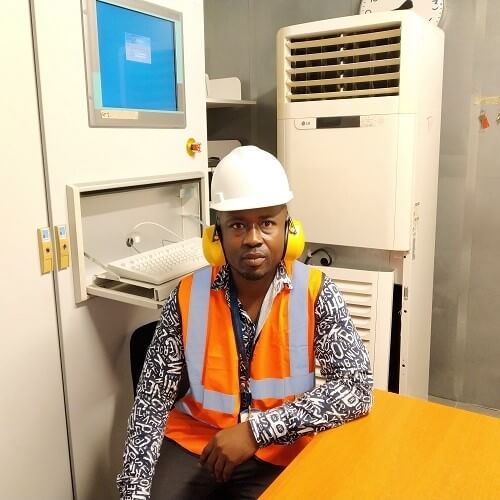
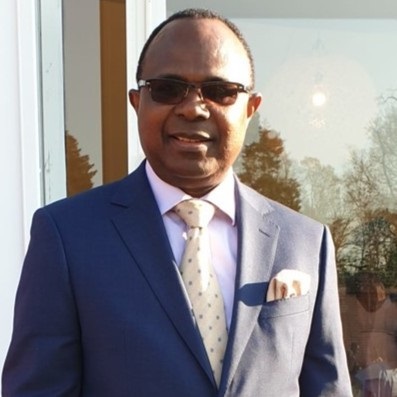
As a Nigerian and then a teenager who had just discovered his passion for solving puzzle like problems, my early experiences with unreliable power and frequent blackouts sparked my initial interest in energy solutions which made me delve into understanding how electricity works. However, due to poor financial strength of my family at the time I finished secondary school, going to the university was impossible. I was lucky to find the Institute for Industrial Technology (IIT) Lagos, where I got a scholarship to study the Electromechanics program for secondary school leavers. The learnings gotten from this equipped me to start my eight years engineering career, having worked in various capacities from maintenance technician to technical advisers and now laboratory technologist.
My passion for Energy deepened further during my early career as I worked hands-on in power generation, distribution and load management in a high-redundancy environment which I was manning. This made realize that energy access should not remain on the level of immediate availability and functionality and helped me seek ways to ensure sustainability
What motivated you to join the EI?
I first heard about the Energy Institute through my mentor in school who was a member. But then, my joining was inspired by current line manager. Having moved to this new Job I noticed that my manager along with several colleagues were members of the EI which seems to be a valued association in this field. My Manger explained what it entails, and the benefits and how I can be become a COREN registered Technologist when I become and Incooperated Engineer. This solidified my decision to become a member.
The application stage made do a thorough self-reflection, which led to a meaningful self-realization – that the work I do has a serious impact in the global energy transition plan.
How is your work contributing toward a just, secure and low-carbon transition?
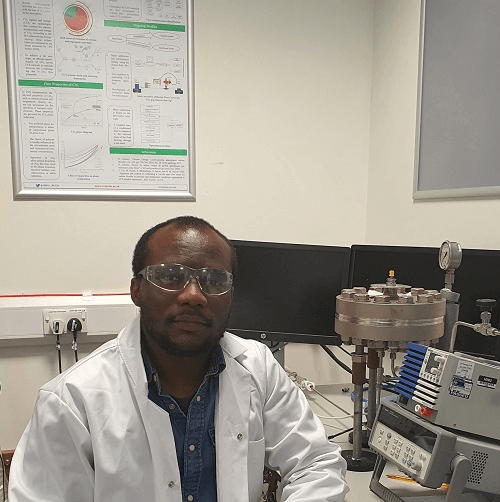
My role as an Electrical and Electronics Laboratory technologist centre around fostering practical training for students in the School of Science and Technology at Pan-Atlantic University. This includes co-designing laboratory manuals, maintaining equipment, managing procurement and assisting students in Hands-on practical session in areas like renewable energy, power systems, analog and digital electronics and circuit designs.
The relevance of the educational sector to the broader electrical and electronics industry is so crucial as it prepares the next generation of engineers and technologist. With the global trend pushing towards a net-zero emission, it is imperative that we must help the young engineers understand the need to embrace sustainable energy solutions and equip them with the necessary skill to drive innovations in clean technology and energy efficiency
However, my contribution to a just transition is not just limited to creating the work force with proper hands-on, market ready skills that will benefit them professionally, it also entails helping students understand and work with sustainable technology, as a major part of our curriculum - which I contributed in designing focuses on renewable energy systems including solar PV modules, inverters and energy storage solution, and also the need for energy efficient circuit.
How has being AMEI benefited your career?
The interim registration has benefited me by adding credibility to my expertise and positioning me for structured career progression. With my Interim IEng I have commenced my application to become a COREN registered Technologist, which adds value to me in my role.
Also, the whole registration process which I said led me to a meaningful self-reflection helped me better understand the significance of my work in the lab particularly it impacts on the global energy sustainability goals. Before now, the lab activities were tasks to complete and grade, but now, I see more reasons to insist on certain standards, ensure standard practices are strictly adhered to and ensure that the learnings extend beyond the lab. This approach has positively impacted students’ learning and has even inspired a few to undertake projects related to solar energy and carbon capture.
Moreover, access to the webinars – just the few I manged to attend, has enlightened me in such a way that I might not have been able to.
Pursuing full Chartership will help show how outstanding I can be in advancing my career. Moreover, it provides recognition of my professional competency and commitment to excellence in the energy sector